
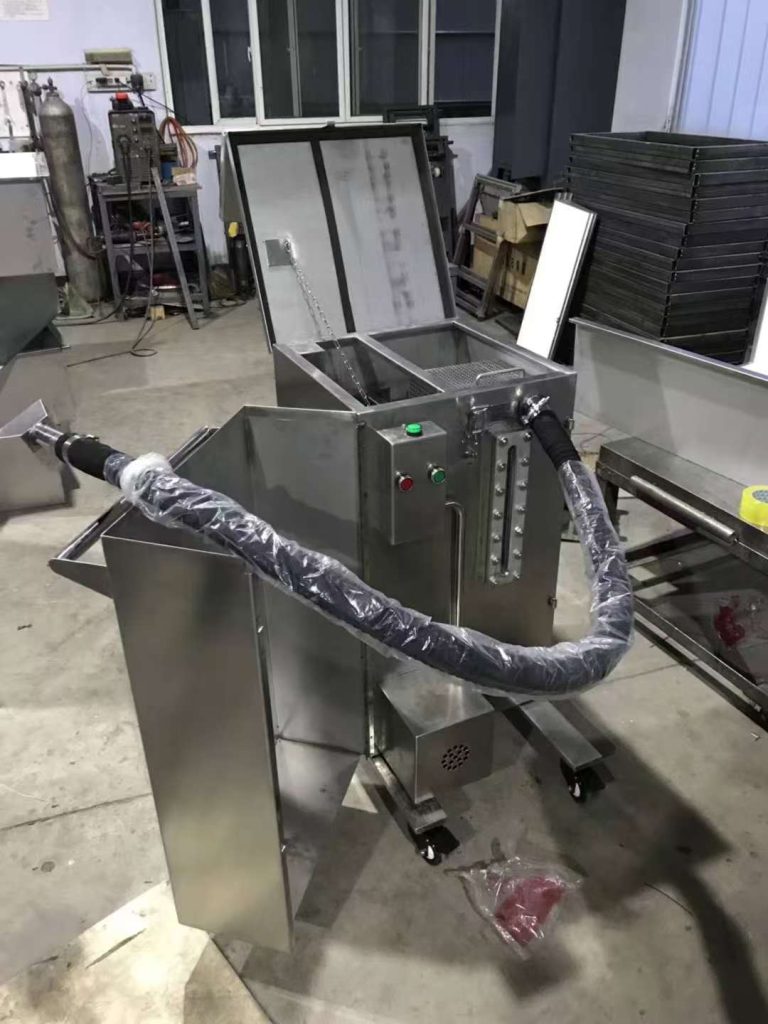
The Ultimate Guide to Stainless Steel Waste Used Cooking Oil Vat Filter Tanks with Vacuum Pump for Storage: A Must-Have Solution for USA and Australian Kitchens
Published: July 2026 | Author: Surri Machinery
Introduction: Why Waste Cooking Oil Management Matters More Than Ever
Every commercial kitchen, from bustling restaurants in New York to seaside cafés in Sydney, generates substantial volumes of waste cooking oil daily. Deep fryers, griddles, and sauté stations produce used oil that, if not handled properly, creates safety hazards, plumbing disasters, and environmental liabilities. The rise of biodiesel production and tightening environmental regulations across the United States and Australia have made professional-grade stainless steel waste used cooking oil vat filter tanks with vacuum pump for storage not just a convenience — but a necessity.
At Surri Machinery, we have observed a surging demand for efficient, durable, and code-compliant oil storage solutions in both the USA and Australian markets. Our newly launched Hot USA Australian Stainless Steel Waste Used Cooking Oil Vat Filter Tank With Vacuum Pump for Storage is engineered to address exactly these pain points, combining industrial-grade materials with high-speed vacuum transfer technology.
This comprehensive article explores the technology behind waste cooking oil vat filter tanks, why stainless steel construction matters, how vacuum pump integration transforms kitchen workflows, and why Surri’s solution is becoming the go-to choice for restaurant operators and waste oil collection businesses across the United States and Australia.
1. Understanding Waste Cooking Oil: A Valuable By-Product, Not Just Waste
Waste cooking oil (WCO), also known as used cooking oil (UCO), is the residual oil generated during food preparation — primarily from deep frying, pan frying, and other high-temperature cooking processes. Common sources include vegetable oil, canola oil, sunflower oil, palm oil, and blended frying oils that have degraded through repeated thermal cycling.
1.1 The Scale of the Problem
In the United States alone, restaurants and food service establishments generate an estimated 2.5 billion gallons of waste cooking oil annually. Australia, with its vibrant café and restaurant culture, produces a proportional volume that requires systematic collection and processing. Improper disposal — pouring oil down drains, into landfills, or leaving it in unsecured containers — leads to:
Sewer blockages and fatbergs
: Solidified grease congeals in municipal pipes, causing costly infrastructure damage.
Environmental contamination
: Oil leaches into soil and waterways, harming ecosystems.
Regulatory fines
: Both the US EPA and Australian state environmental agencies impose strict penalties for improper waste oil disposal.
Missed revenue opportunities
: Waste cooking oil is a sought-after feedstock for biodiesel production, commanding per-gallon collection fees.
1.2 The Biodiesel Connection
The global push toward renewable energy has transformed waste cooking oil from a disposal headache into a valuable commodity. Biodiesel refineries in the USA and Australia actively purchase collected UCO, creating a circular economy where restaurant waste becomes clean-burning fuel. A well-designed stainless steel waste used cooking oil vat filter tank with vacuum pump for storage sits at the center of this value chain — enabling hygienic, spill-free collection, temporary storage, and efficient transport to processing facilities.
2. The Anatomy of a Professional Waste Cooking Oil Vat Filter Tank
Not all oil storage tanks are created equal. Commercial kitchens and waste oil collection businesses require equipment built to withstand harsh operating conditions: high temperatures, corrosive oil residues, frequent cleaning cycles, and constant mechanical stress from pumping operations.
2.1 Stainless Steel Construction: The Gold Standard
Surri’s waste cooking oil tank is fabricated from stainless steel 304 or 201, depending on customer requirements, with a robust 1.75mm wall thickness as standard. Here is why material choice is the foundational decision in oil tank design:
| Property | Stainless Steel 304 | Stainless Steel 201 |
| Corrosion resistance | Superior — resists acidic oil residues | Good — suitable for standard UCO |
| High-temperature tolerance | Up to 870°C intermittent | Up to 800°C intermittent |
| Cleanability | Excellent — non-porous, smooth surface | Very good — smooth finish |
| Cost-effectiveness | Premium investment | Budget-conscious option |
| Durability in wet environments | Proven 20+ year service life | Reliable 15+ year service life |
Both grades far outperform carbon steel or plastic alternatives, which corrode, crack, or degrade when exposed to hot oil and aggressive cleaning chemicals. For kitchens operating in humid coastal environments — such as those in Miami, Brisbane, or Perth — the superior corrosion resistance of stainless steel 304 provides additional peace of mind.
2.2 Vacuum Pump Integration: Speed That Changes Everything
Traditional gravity-based oil transfer is slow, messy, and labor-intensive. Surri’s integrated vacuum pump system redefines this workflow. Capable of transferring approximately 220 liters in just 3 minutes, the pump can rapidly evacuate oil from grease traps, fryer drain ports, or intermediate collection vessels directly into the storage tank.
Key advantages of the vacuum pump system include:
Speed
: What used to take 20-30 minutes of manual ladling or slow gravity draining now completes in under 5 minutes.
Cleanliness
: Closed-system transfer eliminates spills, splashes, and oil-on-floor hazards — critical for HACCP-compliant kitchen operations.
Adjustable pump speed
: Operators can fine-tune the transfer rate to match the viscosity of the oil (thicker, more degraded oil flows slower when cold) and the capacity of the receiving vessel.
Reduced labor cost
: One operator can manage the entire oil collection process, freeing kitchen staff for food preparation tasks.
2.3 Dual Functionality: From Grease Trap to Transport
The Surri tank is designed as a two-in-one solution. It functions both as a stationary storage vat within the kitchen and as a transport-ready container for waste oil businesses. The vacuum pump draws oil directly from grease traps — the in-ground or above-ground separators that capture fats, oils, and grease before they enter the plumbing system — and deposits it into the tank. Once full, the tank can be transported to a central collection point or directly to a biodiesel processing facility.
3. Why the USA and Australian Markets Demand Specialized Solutions
The Hot USA Australian Stainless Steel Waste Used Cooking Oil Vat Filter Tank With Vacuum Pump for Storage is purpose-built for two of the world’s most demanding commercial kitchen markets. These regions share common challenges that generic equipment cannot fully address.
3.1 United States: Regulatory Rigor at Federal, State, and Municipal Levels
The US regulatory landscape for waste cooking oil management is multi-layered:
EPA Spill Prevention, Control, and Countermeasure (SPCC) rules
require facilities storing over 1,320 gallons of oil to have secondary containment and spill prevention plans.
Local grease control ordinances
— such as those in Los Angeles, Chicago, and Houston — mandate specific grease interceptor maintenance schedules and prohibit discharge of FOG (fats, oils, and grease) into sewer systems.
OSHA workplace safety standards
require slip-resistant, spill-contained oil handling practices.
FDA Food Code
indirectly governs used oil storage by requiring that waste be held in durable, cleanable, and leak-proof containers.
A professionally engineered stainless steel waste used cooking oil vat filter tank helps operators demonstrate compliance across all these requirements through its sealed design, durable materials, and documented capacity.
3.2 Australia: High Standards and Harsh Environments
Australia’s food service industry is governed by:
Food Standards Australia New Zealand (FSANZ)
Standard 3.2.2, which requires food premises to have adequate waste storage facilities that are enclosed and constructed of impervious materials.
State-level environmental protection regulations
(e.g., EPA Victoria, NSW EPA) that classify waste cooking oil as a regulated waste stream.
Local council requirements
for grease trap sizing, cleaning frequency, and maintenance records.
Additionally, Australia’s climate — particularly in northern regions — imposes extra demands. High ambient temperatures accelerate oil rancidity and increase vapor pressure inside storage tanks. Stainless steel construction resists thermal expansion stress and prevents the material degradation that plastic tanks suffer under direct sun exposure. Surri’s tank, with its 1.75mm thick walls, maintains structural integrity across a wide temperature range.
3.3 Shared Pain Points Across Both Markets
Labor shortages
: Both countries face acute kitchen staff shortages, making labor-saving automation (like vacuum pump oil transfer) a high-ROI investment.
Sustainability mandates
: Corporate ESG goals and government biofuel mandates create pull-through demand for efficient UCO collection.
Real estate costs
: Urban kitchen footprints are shrinking; compact, vertical-format oil tanks maximize usable floor space.
4. Technical Deep Dive: How Surri’s Vacuum Pump Oil Transfer System Works
Understanding the engineering behind the product helps operators make informed purchasing decisions and maintain the equipment for maximum service life.
4.1 Operating Principle
The vacuum pump creates negative pressure inside the sealed tank, generating suction at the intake hose. When the intake hose is placed in a grease trap or collection vessel, atmospheric pressure pushes the waste oil through the hose and into the tank. This is fundamentally different from a pressure pump, which would push oil from the source — a configuration that risks aerosolizing oil, creating odors, and exposing operators to hot splashes.
4.2 Flow Path
Intake
1. : A flexible, oil-resistant hose (typically 1.5–2 inches in diameter) connects to the tank’s intake port.
Filtration
2. (optional): A coarse mesh strainer at the intake prevents solid debris (food particles, breading, sediment) from entering the pump mechanism.
Vacuum chamber
3. : The pump evacuates air from the tank, reducing internal pressure.
Oil ingress
4. : Waste oil flows into the tank under atmospheric pressure differential.
Level monitoring
5. : Operators can observe fill level through a sight glass or level gauge (depending on configuration).
Shutoff
6. : Once the desired volume is transferred or the tank reaches capacity, the pump is turned off and the intake valve sealed.
Transport/Storage
7. : The tank can remain in place as stationary storage or be moved (with appropriate handling equipment) for off-site transport.
4.3 Performance Metrics
| Parameter | Specification |
| Transfer rate | ~220 L in 3 minutes (~73 L/min) |
| Tank material | Stainless steel 304 or 201 |
| Wall thickness | 1.75 mm (standard) |
| Vacuum pump type | Customizable per order |
| Speed control | Adjustable |
| Primary applications | Restaurant kitchens, waste oil collection businesses |
| Target markets | USA, Australia (global shipping available) |
4.4 Customization Options
Surri recognizes that no two kitchen operations are identical. The vacuum pump type can be configured to match available power supplies — single-phase 110V (USA standard), single-phase 230V (Australian standard), or three-phase industrial power. Additionally, if a customer has a proprietary tank design, connection layout, or dimensional requirement, Surri’s engineering team can customize the tank to fit existing workflows rather than forcing the customer to adapt to off-the-shelf dimensions.
5. Key Benefits for Restaurant and Commercial Kitchen Operators
5.1 Food Safety and Hygiene Compliance
Closed-system oil transfer dramatically reduces the risk of cross-contamination. Open buckets, funnels, and manual pouring create opportunities for oil to contact food preparation surfaces, flooring, and staff uniforms. The vacuum system keeps waste oil enclosed from grease trap to storage tank, supporting HACCP (Hazard Analysis and Critical Control Points) compliance.
5.2 Workplace Safety
Slips and falls are among the most common workplace injuries in commercial kitchens. Spilled cooking oil creates an exceptionally slippery surface that standard floor cleaners struggle to address. The Surri vacuum pump system eliminates the manual handling steps most likely to cause spills: bucket pouring, funnel overflow, and hose disconnection drips.
5.3 Operational Efficiency
A typical mid-sized restaurant might generate 50-100 liters of waste oil per week. With manual handling, staff spend 20-30 minutes per collection event — time diverted from food preparation, cleaning, and customer service. The Surri system reduces this to 3-5 minutes per collection, translating to approximately 15-20 hours of recovered labor per year for a single restaurant.
5.4 Revenue from Waste
Used cooking oil is not trash — it is an asset. Licensed collection companies pay restaurants for their UCO, with rates fluctuating based on commodity oil prices and biodiesel demand. A well-maintained, uncontaminated oil supply stored in a stainless steel waste used cooking oil vat filter tank commands premium pricing because it requires less downstream processing. Water-contaminated or debris-laden oil, by contrast, may be rejected entirely or priced at a significant discount.
5.5 Environmental Stewardship
Restaurants that implement professional oil management systems can credibly market their sustainability practices to increasingly eco-conscious diners. Displaying a commitment to proper waste oil recycling — facilitated by equipment like the Surri tank — supports brand positioning in competitive urban markets like San Francisco, Melbourne, and Portland.
6. Key Benefits for Waste Oil Collection and Biodiesel Businesses
The Surri tank is equally valuable for businesses on the collection and processing side of the value chain.
6.1 Faster Route Completion
For waste oil collection companies servicing dozens of restaurants per day, pump speed directly impacts route profitability. The ability to transfer 220 liters in 3 minutes means less time idling at each stop, more stops per shift, and reduced fuel consumption from idling collection vehicles.
6.2 Reduced Cross-Contamination
Collection companies often aggregate oil from multiple restaurants. A dedicated collection tank with a sealed vacuum transfer system prevents mixing of incompatible oil types and reduces the introduction of water, food solids, and cleaning chemicals that degrade oil quality and complicate biodiesel conversion.
6.3 Durability for Mobile Operations
Tanks mounted on collection trucks or trailers face vibration, thermal cycling, and road shock. The 1.75mm stainless steel construction withstands these stresses far better than thinner-gauge alternatives, reducing downtime and replacement costs.
7. Comparison: Stainless Steel Vat Filter Tank vs. Alternative Storage Methods
| Feature | Surri Stainless Steel Tank with Vacuum Pump | Plastic Drum / Tote | Manual Bucket + Funnel | Gravity Drain System |
| Material durability | 20+ years | 3-5 years (UV/crack degradation) | N/A (disposable) | Variable |
| Transfer speed (220L) | ~3 minutes | 20-30 minutes (gravity) | 30-45 minutes (labor) | 15-25 minutes |
| Spill risk | Low (closed system) | Medium (open pour) | High (open pour) | Medium |
| Compliance ready | Yes (sealed, SS construction) | Partial (sealed but plastic) | No (open handling) | Partial |
| Labor required | 1 operator, minimal effort | 1-2 operators, physical | 2+ operators, strenuous | 1-2 operators |
| Customizable | Yes (pump type, dimensions, design) | Limited | No | Limited |
| Long-term TCO | Low (durability + labor savings) | Medium (replacement costs) | High (labor cost) | Medium-High |
8. Installation, Operation, and Maintenance Best Practices
8.1 Installation Checklist
Verify power supply compatibility (110V / 230V / 3-phase) with the selected vacuum pump.
Position the tank on a level, load-bearing surface with adequate clearance for intake hose connection.
Ensure grease trap access is unobstructed and the intake hose can reach without kinking.
Install secondary containment (drip tray or bund) if local regulations require it.
Label the tank clearly as “Waste Cooking Oil — Not for Food Use.”
Position a fire extinguisher (Class K for kitchen oil fires) within accessible distance.
8.2 Daily Operation Protocol
Pre-check
1. : Inspect hoses and connections for signs of wear, cracking, or looseness.
Connect
2. : Secure the intake hose to the tank’s intake port and lower the hose end into the grease trap or collection vessel.
Start pump
3. : Activate the vacuum pump and monitor the initial oil flow for obstructions.
Monitor fill level
4. : Use the sight glass or level gauge to track tank fill; stop the pump before overfilling.
Seal
5. : Close the intake valve once transfer is complete to maintain tank integrity and prevent odor escape.
Log
6. : Record the collection date, approximate volume, and any observations (unusual color, odor, water content).
8.3 Periodic Maintenance
Weekly
: Wipe down the tank exterior with a food-safe degreaser. Inspect the intake strainer for accumulated debris and clean as needed.
Monthly
: Check all gaskets, seals, and valve seats for integrity. Tighten loose fittings. Test the vacuum pump’s suction pressure against baseline specifications.
Quarterly
: Conduct a full tank interior inspection (if accessible). Look for pitting, scale buildup, or weld cracking. Verify the vacuum pump’s oil level or lubrication state (per pump manufacturer’s instructions).
Annually
: Professional service of the vacuum pump unit. Hydrostatic testing of the tank if required by local pressure vessel regulations.
9. Regulatory Compliance: What USA and Australian Buyers Need to Know
9.1 United States
| Regulation | Relevance | How Surri’s Tank Helps |
| EPA SPCC Rule (40 CFR Part 112) | Applies if total oil storage >1,320 gallons | Stainless steel construction meets secondary containment material standards |
| OSHA 29 CFR 1910 (Walking-Working Surfaces) | Slip/fall prevention | Closed-system transfer eliminates floor spills |
| Local FOG ordinances | Grease trap maintenance, oil storage | Sealed tank meets “leak-proof container” requirements |
| FDA Food Code (Chapter 6) | Waste storage containers | SS304/201 meets “durable, cleanable, nonabsorbent” criteria |
9.2 Australia
| Standard / Regulation | Relevance | How Surri’s Tank Helps |
| FSANZ Standard 3.2.2 | Waste storage in food premises | Stainless steel is an “impervious material” per the standard |
| State EPA waste tracking | UCO classified as regulated waste | Closed-system transfer supports chain-of-custody documentation |
| AS/NZS 1200 (Pressure Equipment) | If tank operates under vacuum pressure | Customizable to meet pressure equipment requirements |
| Work Health and Safety (WHS) Acts | Manual handling and hazardous substances | Vacuum pump eliminates manual oil lifting and pouring |
Disclaimer: The above is a general informational overview. Buyers should consult local authorities or a qualified compliance specialist to confirm specific regulatory requirements in their jurisdiction.
10. The Surri Advantage: Why Choose Our Hot USA Australian Stainless Steel Waste Used Cooking Oil Vat Filter Tank
10.1 Proven Market Fit
This product was developed in direct response to feedback from restaurant operators and waste oil collectors in the USA and Australia. It is not a generic, one-size-fits-all product adapted to these markets after the fact — it was purpose-engineered for the voltage standards, regulatory frameworks, and operational patterns of these two countries.
10.2 Factory-Direct Customization
Surri is the manufacturer, not a reseller. This means:
Custom vacuum pump types
: Choose the pump that matches your power supply and performance requirements.
Custom tank dimensions and port layouts
: Send us your design, and we will fabricate to your specifications.
Material grade selection
: Choose between SS304 and SS201 based on your budget and corrosion-resistance needs.
Branding and color
: Tanks can be finished to match corporate identity requirements.
10.3 Quality Without the Middleman Markup
By manufacturing in-house and selling direct, Surri delivers industrial-grade equipment at competitive pricing. Customers pay for engineering and materials — not for distributor margins, warehousing markups, or retail overhead.
10.4 Global Shipping and Support
While the tank is optimized for USA and Australian conditions, Surri ships worldwide. Our logistics team handles freight forwarding, customs documentation, and delivery coordination, and our technical support team provides remote installation guidance and troubleshooting.
11. Frequently Asked Questions
Q: What types of cooking oil can this tank store?
A: The tank is compatible with all common waste cooking oils, including vegetable oil, canola oil, sunflower oil, palm oil, soybean oil, blended frying oils, and animal fats (lard, tallow). The stainless steel construction resists corrosion from oil acidity across the full pH range of used cooking oils.
Q: Can the vacuum pump handle hot oil directly from a fryer?
A: The pump and hose assembly are rated for oil at typical fryer operating temperatures (up to 190°C / 375°F). However, we recommend allowing oil to cool to a safe handling temperature (below 60°C / 140°F) before vacuum transfer to extend hose and seal service life and reduce burn risk to operators.
Q: How do I clean the tank interior?
A: For routine cleaning, flush the tank with a food-safe degreaser solution and rinse thoroughly with hot water. For heavy residue buildup, a CIP (clean-in-place) spray ball can be installed as a customization option. Always ensure the tank is completely dry before sealing for storage.
Q: What is the lead time for a custom-configured tank?
A: Standard-configuration tanks ship within 15-25 business days. Custom designs, dimensions, or pump configurations typically require 25-40 business days, depending on complexity. Contact our sales team for a specific timeline based on your requirements.
Q: Do you offer spare parts and after-sales support?
A: Yes. We stock vacuum pump service kits, replacement hoses, gaskets, valves, and level gauges. Our technical support team is available via email to assist with troubleshooting, maintenance guidance, and part identification.
Q: Is the tank suitable for outdoor installation?
A: Stainless steel 304 tanks are suitable for outdoor installation in most environments, including coastal areas. Stainless steel 201 is recommended for indoor or sheltered outdoor locations. For extreme environments (offshore platforms, chemical plants), please discuss your specific conditions with our engineering team.
12. Conclusion: Invest in the Right Equipment Today
The way your kitchen handles waste cooking oil affects your food safety record, your workplace injury rate, your environmental compliance standing, and your bottom line. A professionally engineered stainless steel waste used cooking oil vat filter tank with vacuum pump for storage is not merely a piece of equipment — it is a risk management tool, a labor-saving asset, and a revenue enabler.
Surri’s Hot USA Australian Stainless Steel Waste Used Cooking Oil Vat Filter Tank With Vacuum Pump for Storage brings together:
Industrial-grade stainless steel construction (1.75mm, SS304 or SS201)
High-speed vacuum pump transfer (220L in ~3 minutes)
Adjustable pump speed for operational flexibility
Factory-direct customization to match your exact requirements
Proven performance in USA and Australian commercial kitchens and waste oil businesses
Ready to Upgrade Your Waste Oil Management System?
Contact Surri Machinery today to discuss your requirements, request a quotation, or inquire about customization options.
Visit our product page: Surri Stainless Steel Waste Used Cooking Oil Vat Filter Tank
Email us: Julie@surrimachine.com
Send your inquiry with your requirements, desired tank capacity, vacuum pump specifications, and any customization needs.
Surri Machinery — Engineered for Kitchens That Demand More.